
Nov 26, 2026
What Is Human-Centered Safety?
By Blaine J. Hoffmann, MS OSHM
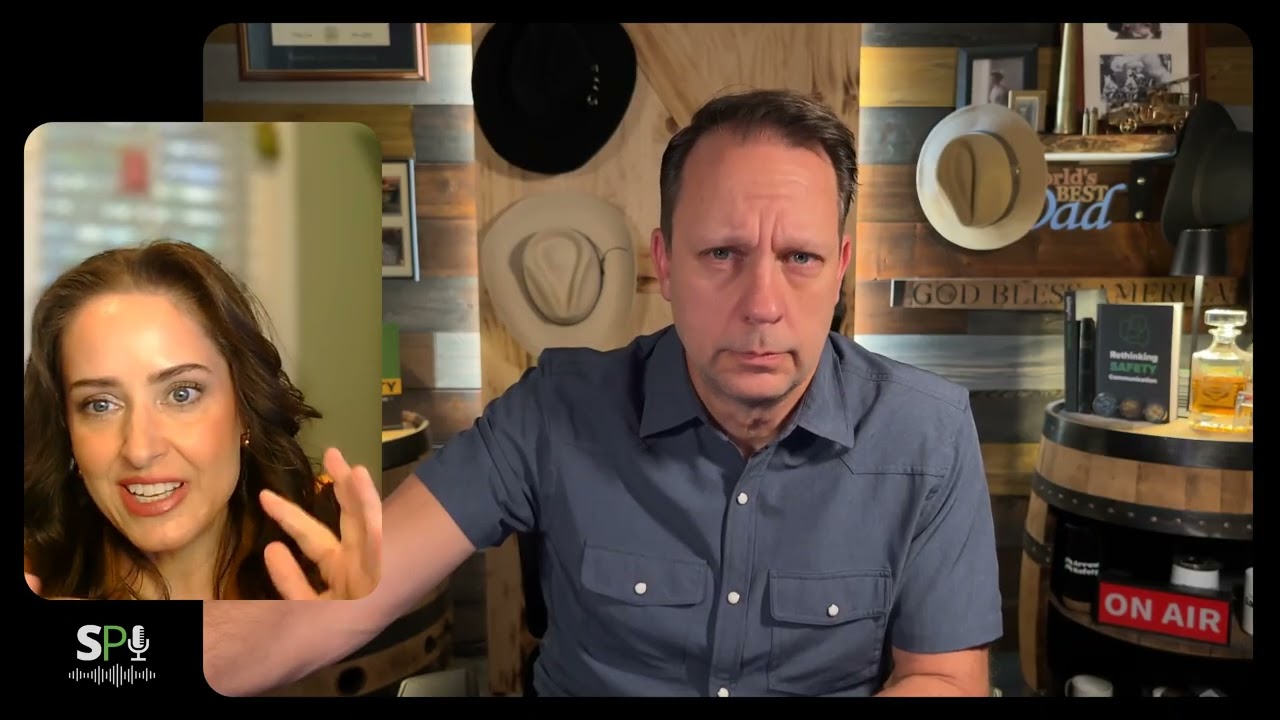
On Episode 202 of The SafetyPro Podcast, an episode titled Human Centered Safety, Aron Yellott said the whole purpose behind her mission is to "reignite the humanity that's behind safety." For Aron, that starts with remembering that the people behind injury numbers are somebody's dad, somebody's husband, somebody's child. In her work, it also means looking at the job from the employee's side and asking why a decision made sense at the time, instead of who to blame.
Two other conversations with host Blaine J. Hoffmann add to the picture: Alex Paradies of TapRooT on Episode 190, and a live panel on serious injuries with Adam Britton and Justin Clark on Episode 195, recorded at the 2025 TapRooT Global Summit.
Start from the employee's side
Aron went into safety work after losing her husband to an exposure at work, a story told in our earlier post on Episode 202. Watching what safety looked like from the employee's side, through her husband's incident, became what she called "the structure and the backbone" she brings into organizations.
Aron said a worker who is hurt or exposed on the job often assumes they'll be the one in trouble. They wonder whether they'll lose their job. They think about their family and what happens when they can't bring in money.
So Aron asks Safety Pros to keep the person in view, not the statistic. "It's so easy to turn people into numbers and statistics," she said.
She also offers a test. Would you be comfortable asking your own son or daughter to do what you're asking this worker to do? If the answer is no, Aron said, why ask it of somebody else's child? In her words, "everybody is somebody else's son, somebody else's daughter."
Hear the risk, even when the tone is rough
When employees in high-risk work stop a job because it isn't safe, Aron said, it often doesn't sound nice. It's angry, loud and demanding. That isn't always a worker trying to cause problems. Often, she said, they've been raising something for a month, nobody has responded, and now it's crunch time and they're scared. "You have to address the risk whether you like their tone or not," she said.
Aron gave an example of what gets missed. A worker keeps reporting that a guard is broken, and the equipment keeps running because of production pressure. If a hand goes in, the incident report says failure to use the guard. It doesn't capture how long the worker had been reporting it.
Blaine saw this in employee interviews as a consultant. People would point to the coworker who always had a gripe. Blaine didn't know that person, but could decide whether what they said was valid: "get off of the person and onto the process." Blaine also asked whether a site with a stop-work program has trained and coached people to receive the call.
Ask why it made sense, not who messed up
Aron said we very rarely ask why doing something made sense at the time. One organization she worked for answered every incident with retraining, and built up a huge backlog of it without ever understanding why the choice made sense to the worker.
Blaine's version for operations people: if an average worker could go through your onboarding and training, do the task that way and get hurt, what does that say about your process? "We hire average people," Blaine pointed out.
Alex Paradies, on Episode 190, turned the question on the people judging the mistake. "There's people that see mistakes as moral failings," Alex said: they don't try hard enough, they don't care enough. Alex admitted falling into that trap as a supervisor. Everyone has a bias, in Alex's view, and no process helps an investigator who already has the answers and won't go out and get them. You have to be curious.
On Episode 195, Adam Britton, a director of workplace safety with International Flavors and Fragrances, put it simply: "We are all people." After an incident, Adam said, it's easy to ask "what was that person thinking?" In the moment, they were probably doing the best they could with the resources they had. Blaine added a principle that, in Blaine's view, is one of the most important to remember in incident investigations: context drives behavior. There's more on the human-centered safety topic page.
Make the right way the easy way
Blaine asked the Episode 195 panel a human factors question: is the work "easy to do right, hard to do wrong"? One panelist compared it to rumble strips on a highway, a simple technology that tells you you're drifting before you end up in the ditch. Today, that panelist's team focuses on basics: on a new piece of equipment, are the isolation points (where you shut off its energy) close by, or do people have to guess? Is the process removing the chances for mistakes one at a time?
Justin Clark, a site health and safety manager at a Canadian gold and copper mining company, described a habit the site had to change. Crews checking the safeguards on high-risk work would find a missing one, fix it, mark it green and move on. Now they also record what was wrong so they can see patterns over time, under what Justin called a fair and just model, with no blame. There's more on that program in our post on Episode 195.
The session's timekeeper closed with a challenge: a program for preventing serious incidents has to be "positive and not blame oriented for the people that are doing this task."
Dignity, and leaders who listen
On Episode 202, Blaine talked about dignity in work. To Blaine, the most undignified thing is sending a signal that the work isn't important enough to set up properly, while the machine can never go down. At one site, coolant leaked all over the floor because the machines weren't shut down for maintenance. Blaine told the supervisor, "Go get your desk," and asked whether the supervisor would want to work an entire shift out there.
Aron said that for all the education people get, nobody teaches them how to lead others or how to respond in very stressful situations. Blaine made a similar point: people get promoted for doing good work, rarely for being good with people. Aron's advice was to go talk with the people doing the work. That doesn't give away any of your power, she said. It gives you valuable information.
"Being soft does not mean spending too much money," Aron said. And when people describe the best boss they ever had, she said, they don't talk about production numbers. They talk about what that person did for them.
What to take back to your site
- Read your last few incident reports from the worker's side: what had they already reported, and to whom?
- When someone raises a concern angrily, write down the risk and act on it, whatever the tone.
- Before an investigation ends in retraining, ask why doing it that way made sense at the time.
- Walk one task with a supervisor and ask whether it's easy to do right and hard to do wrong.
- Use Aron's test: would you ask your own son or daughter to do this job the way it's set up today?
The full conversations in Episodes 202, 190 and 195 go further into Aron's story, when an investigation can stop, and how two companies check the safeguards that prevent serious injuries.