
Nov 25, 2026
Why Crews Go Through the Motions at Stretch and Flex
By Blaine J. Hoffmann, MS OSHM
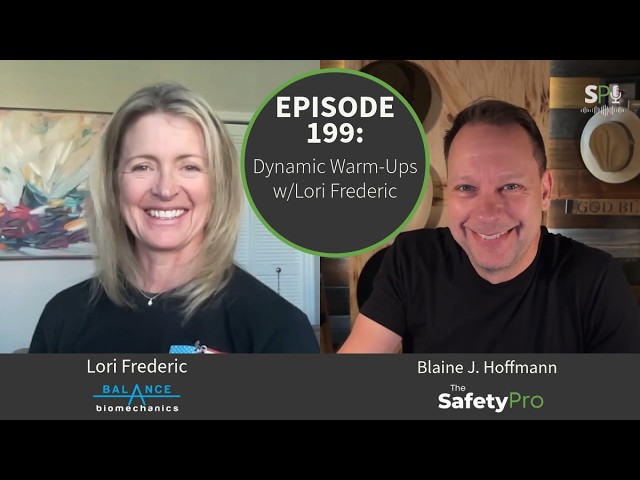
A worker got sent to one of Lori Frederic's leader classes at the last minute. He wasn't supposed to be there, but there was a free lunch. He'd been doing a warm-up stretch for the back of the leg without ever knowing what it was for. "I was the one in the back just going through the motions, not even caring," he told Lori. Once Lori explained where he should feel it and what it was doing, he said he'd tell everybody, and that now he'd actually do it.
Lori told that story on Episode 199 of The SafetyPro Podcast. Lori's company has worked on injury prevention in high-hazard industries for about 14 years, with an athletic-performance mindset: build resilience and durability into people instead of chasing perfect ergonomics in jobs where perfect ergonomics can't happen. Lori is pushing back on the idea that blue-collar work means back pain forever and surgery at retirement. The company's tagline is printed on Lori's sleeve: "make work suck less."
Why Lori wants warm-ups to move
Most of Lori's work right now is helping companies switch from a static stretch-and-flex warm-up to a dynamic one. Stretch and flex is fine, Lori said, and a good starting point. But for physical work, where people end up in a bunch of different positions, a dynamic, more athletic approach "prepares the body better than a stretch and hold for 15 seconds and part by part warm up."
Lori's team also adds a little strength and balance to the warm-up. Someone working 10- and 12-hour days in construction rarely has time for the gym, so the team looks for small chances during the workday, maybe after lunch.
The why is what gets people to do it
Lori has heard some version of that worker's story numerous times. On big job sites, Lori's company teaches a six-hour class for leaders on its mobility program, and on multi-employer sites many contractors send representatives. The class is mostly about the why.
Most Safety Pros have seen the warm-up Lori described: people half awake, waiting for an energy drink to kick in, following the leader through something they've done for years. They don't see how it could prepare them for work on their knees or overhead. Explain the why, Lori said, and you get better buy-in. Not from everybody, and you won't get 100%, but from a whole lot of people.
Find the people who will carry it
The worker who said he'd tell everybody is exactly who Lori wants to reach. On a huge job site, Lori said, someone who cares about the people around him is invaluable.
Blaine added that a video or a link can't replace seeing the light bulb go off in person. Lori agreed a video might help some people, but asked how you'd know, and how you'd follow up.
After 14 years, Lori sorts people into "the old and stubborn and the young and bulletproof." The surprise is the first group. Give some of them the why, let them feel a big change, and they become the biggest cheerleaders. Blaine pointed out that it takes repetition, and you might not reach someone the first time. Lori's version: "Same message, different ways."
Doing physical work isn't the same as being fit
When people on job sites tell Lori their back or knees hurt, or that they need to lose weight, Lori's answer is often that they need more muscle, and a lot of times different muscles than the ones they use over and over all day. Many people assume physical work makes them physically fit. As Lori put it, we've all walked through a job site, and not everybody there is.
Lori isn't asking anyone for a six-pack. The goal is for people to do their work movements better. Lori's short version: prepare your body better, work smarter (not perfect work, smarter), and give everybody permission to recover.
Lori's company has done job assessments for businesses that rent out e-bikes, where the people who repair the bikes move them around a lot. Lori's message to them: "This is your workout. So treat it as such." Otherwise, Lori said, they're going to get hurt.
Rushing a crew can end in a strain
Lately Lori has spent a lot of time on mission-critical data center builds, with high production demands and many contractors on site. Blaine noted that the "mission critical" label alone can change how fast people feel they need to work.
Blaine's example: an electrician on a stepladder wiring overhead boxes, with 37 of them in one corridor. Where do the breaks go, and when does the electrician come down? Lori's answer: keep preaching "get done, get done, get done" at that worker, and the worker will burn out to the point of probably straining something. Lori said you still get the production when people take their micro breaks. And new employees have to be conditioned into that kind of work. You can't drop someone straight into it.
What to take back to your site
- Ask whoever leads your warm-up to explain what each movement is for, not just lead it.
- If your warm-up is still stretch and hold, part by part, look into the dynamic approach Lori described.
- Notice who starts telling others about the warm-up, and give that person more to carry.
- On long, repetitive tasks, plan micro breaks instead of pushing "get done" all day.
- Don't put a new worker straight onto the full pace of physical work. Lori said they have to be conditioned into it.
The full conversation with Lori covers more on data center builds and how attitudes about health and fitness have changed over the years.