
Nov 25, 2026
A Green AI Risk Score Is Not a Guarantee
By Blaine J. Hoffmann, MS OSHM
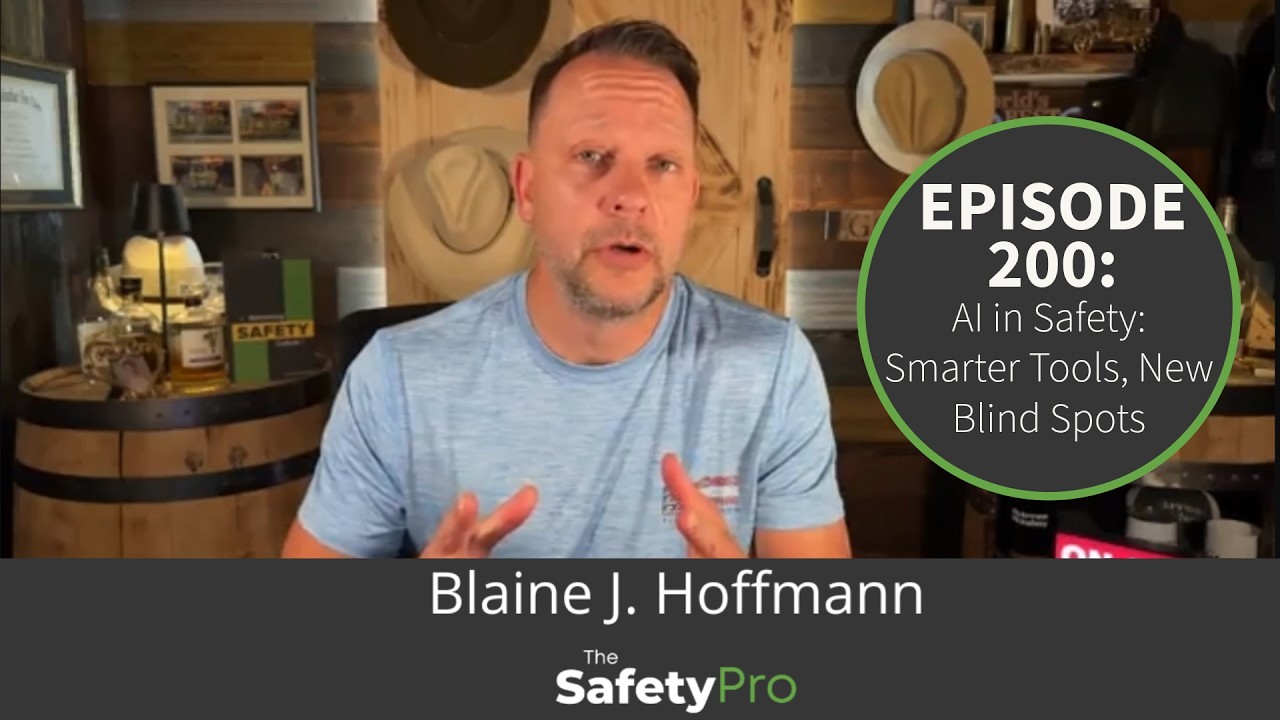
Picture a morning report that gives each area of your facility a risk score. Today, everything is green. A supervisor under pressure to hit production targets looks at that green score and makes a call they wouldn't have made otherwise.
That scenario comes from Episode 200 of The SafetyPro Podcast, with host Blaine J. Hoffmann. It's a short solo episode about AI in safety, and Blaine is clear from the start: "I'm not here to sell you on AI." The concern is that the same tools that help us spot hazards faster can create a false sense of security that ends with people getting hurt.
Where the new tools help
Safety Pros have heard vendors promise to revolutionize their programs before. Some new tools do help, though.
QR codes are one. A worker scans a code and reports a hazard without an app or a login. A safety committee member scans the code on each fire extinguisher and marks it inspected or in need of service. Blaine likes that it lowers the barrier to reporting.
Blaine also points to AI that turns old paper forms, PDFs and scanned documents into working digital forms. Instead of paying someone to rebuild a stack of lockout/tagout procedures by hand, you ask the tool to match your template, photos included. Blaine doesn't call it magic, just useful.
A camera shows what happened, not why
Computer vision calls for more care. Cameras can flag a missing hard hat, or a worker bending at the waist instead of lifting with their legs. If the goal is to watch workers, Blaine says, you're using it wrong.
The better use is spotting patterns in the work. Say a worker has spent two and a half hours handling loads at floor level. That should send you to the process: can the work be broken up, or the materials moved within easier reach?
The worker may be twisting and reaching to save time on a heavy workload, and the camera misses that context. If a video shows someone turn with an object and nearly walk into a coworker, the easy AI answer is that the worker wasn't paying attention. Blaine is firm that this can't be the root cause. Someone still has to go talk with the people doing the work and find solutions with them.
Risk scores are only as good as the data behind them
Blaine pointed to research on AI and emerging risks in occupational safety: when workers and managers defer to the algorithm instead of their own professional judgment, the risk shifts from the hazard to the system.
"A risk score is a probability estimate, so it's not a guarantee," Blaine says. If a team doesn't understand that difference, Blaine calls it a training problem no AI tool can solve.
In Blaine's view, EHS data in most organizations is incomplete and shaped by underreporting. If near-miss reports are low, the AI learns from a partial picture, which can make an area look safe, or make it look far riskier than it is and pull resources to the wrong place.
One company Blaine worked with wanted to use its last three years of incident reports to train a tool that suggests human factors questions. Those reports were the reason the process needed fixing: about 80% named worker error as the root cause, and 60% of the corrective actions were coaching. Training AI on that would teach it to produce more of the same.
The answer isn't to skip the technology. Building a strong reporting culture comes first. Ask whether you trust your data and whether it reflects what's happening on your shop floor. If it doesn't, start there.
People change what they do when they feel watched
Workers who feel watched by AI cameras or wearables may change how they work to avoid tripping a flag. That isn't working more safely.
Blaine shared a story from consulting work. A company ran a step challenge with pedometers, and the prize, a three-day weekend trip, was valuable enough to matter. Workers with little chance to walk sat at their desks and shook their pedometers. One rigged a spring. The wellness goal got lost, and people worked the monitor instead.
GPS tracking in fleet vehicles drew a similar reaction when it first rolled out. Drivers heard that someone would be checking where they stopped. Blaine's point is that how you introduce these tools matters as much as the tools themselves, maybe more.
Hazard recognition is a skill people can lose
The long-term risk Blaine raises is deskilling. If the camera catches the missing hard hat, the supervisor may stop checking.
Aviation has studied this. Automation has arguably made flying safer, and it can also produce pilots who struggle when the automation fails. Blaine's view is that AI in safety should support human judgment, not replace it. Making that clear is a leadership job no software vendor will do for you.
What to take back to your site
- Pick tools that solve a specific, documented problem in your organization, not the ones with the best demo.
- Clean up your data before you buy, from past incident reports to your OSHA 300 log. Hand-pick cases that show what good looks like.
- Bring workers in before the decision is made. Explain what the tool does, what it doesn't do, what data it collects, and who can see it.
- Keep your safety walks, field-level hazard assessments and safety conversations going. Blaine calls them "the immune system that will catch what AI misses."
- Before you post QR codes for hazard reports, check your cell phone policy for the production floor. Asking workers to pull out a phone there could put them at odds with your own rules.
The full episode also covers wearables and privacy, why VR training won't reach every worker, and the reminder that "the hazard you haven't seen yet is not the same as a hazard that doesn't exist."