
Nov 25, 2026
The Trouble With Saying There's No Such Thing as a Root Cause
By Blaine J. Hoffmann, MS OSHM
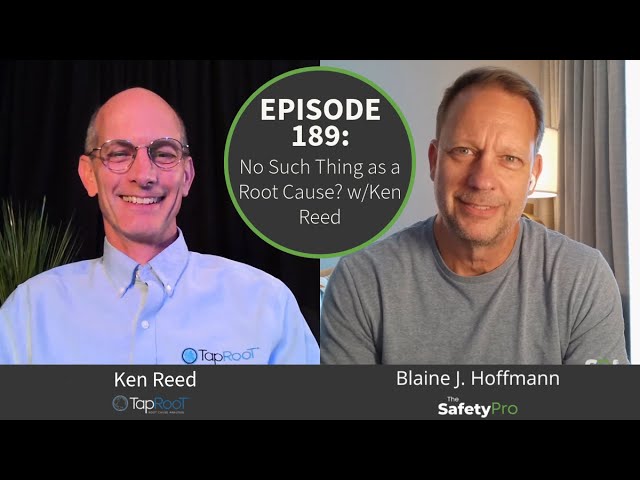
A LinkedIn headline from Ken Reed made Blaine J. Hoffmann stop scrolling: there's no such thing as a root cause. Ken wrote it to grab attention, and it worked. The post was about why people might think that, and why it doesn't make much sense.
Ken, from TapRooT, joined Blaine on Episode 189 of The SafetyPro Podcast, which aired in July 2025. Ken spent 21 years on the nuclear power side of the Navy, and had been with TapRooT almost 20 years when the episode aired, running instructor certification and course development.
Why the claim keeps coming back
Ken remembers the same claim making the rounds about 10 years earlier. People got over it once they saw it was kind of silly. Now it's back, and some of what Ken had seen came from human and organizational performance (HOP) consultants.
Ken doesn't think the people saying it are dishonest. A lot of it is branding and terms: everybody has a brand, so a root cause gets called something else. Look closely at what they're saying, and Ken isn't convinced their thinking is that different.
The worry is the people who hear it. "What I'm concerned with is that people take that at face value," Ken said. Then the thinking goes: no root cause means nothing to analyze, nothing to look for and nothing to fix.
Blaine sees managers wanting a tool that gets them to the end quicker. Ken's version: people are hoping for "some magic pixie dust" that gives them an answer to a complex problem in three minutes. It doesn't work that way.
Five whys finds what you already know
Blaine has a favorite tool to pick on as the most misused, and Ken named it: five whys. Blaine called it "a hammer in search of a nail."
It sounds quick and easy, and Ken grants it's better than nothing. The problem is expecting the average person to know the right questions to ask. You don't know what you don't know. Ken's example was a training person running five whys: "amazingly enough, I end up at training root causes and training corrective actions." If you don't know to ask how a control panel is set up, what color a light should be or what tone an alarm should make, you'll never find those problems.
Blaine has watched people grab a five-whys form the minute an injury happens. Blaine's rule: "in order for me to understand how or why something happened, I have to know what happened." Ken agreed: "if you haven't collected any evidence, there's nothing to analyze."
Ken's test for any method is consistency. "If I gave the same investigation to three different teams, I should get the same answer," Ken said. Give the same case to three five-whys teams, and Ken expects three different answers. Blaine's example: one team asks why the worker didn't wait for help with a lift. Another asks why the worker had to bend over and lift it.
Most answers lead to a person
Very few people are trained in why humans make errors, Ken said, yet most investigations will probably point to someone's mistake. Without guidance built into the process, the investigator gets stuck. Investigators are people too, and Blaine and Ken agreed they carry the same biases.
Nobody comes to work planning to put a hand into a caught-in hazard, Ken said, yet it happens. Telling the person who just lost a finger not to do it isn't helpful. That person already knows, and it does nothing for the next person who makes the same call. "We have to understand the reason people make these decisions." Maybe it's "just this one time." Maybe everybody does it that way, so it must be OK. In Ken's words, people do it again "not because they're bad people, because they're people."
Blaine's process test borrows a phrase Alex Paradies of TapRooT loves: is it easy to do right, hard to do wrong? Blaine asks people what frustrates them about the process. Maybe a part always hangs up in the machine, the work backs up, and someone starts yelling. Then comes the people test: would most people in that spot give in to the same pressure?
Signs are easy, and that's the problem
Blaine thinks companies shy away from engineering or elimination fixes because they look like the most time, money and effort. It's easier to put up a sticker and tell people not to do it.
Ken added that most people aren't trained in human performance, so changing it feels daunting. A sign you can picture. You can put it up and check it off. Blaine's starting question is why the task has to be done that way at all. Ken's: "Why is it unguarded? Why can I stick my hand in there?"
HOP and root causes aren't rivals
Ken has nothing against HOP, and the ideas behind it aren't new. Ken sees HOP and good root cause work as two different paths to good results that complement each other.
Blaine's concern is one HOP principle, that people make mistakes, getting read as a reason to accept them. Some human error can be eliminated, Blaine said. Ken agreed, though Ken would rather say minimized, since people will always make errors: "You don't have to accept that they're there and just shrug your shoulders and move on."
What to take back to your site
- Before anyone asks "why," write down what happened: who, where, when and what task.
- Give one closed investigation to two or three people separately and compare their answers. If they differ, your method depends on who runs it.
- Check whether your corrective actions keep landing in the investigator's own field, like training from a trainer.
- Before you put up a sign, ask why the hazard is there at all.
The full conversation with Ken covers how behavior-based safety drifted into blame, in Ken's view, and why interviewing is a skill.