
Nov 25, 2026
Borrow Marketing's Playbook for Your Safety Messages
By Blaine J. Hoffmann, MS OSHM
Ask a room which department always nails its communications, with the polished look and the same font and colors every time, and the answers come fast. Marketing. Maybe HR. The corporate communications people who write to shareholders.
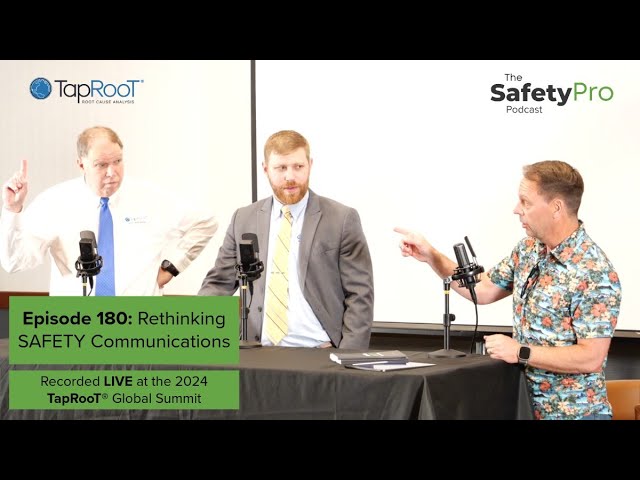
Blaine J. Hoffmann put that question to a live audience at the 2024 TapRooT Global Summit, with Mark Paradies and Alex Paradies of TapRooT on the panel. The session became Episode 180 of The SafetyPro Podcast. Blaine's point: safety should take a page from that book.
Give safety one look and one voice
Blaine described marketing as an umbrella over branding, advertising and public relations, and said a safety department needs all three. A logo, a slogan and a color scheme let people recognize a safety poster or email the moment they see it. Public relations covers every interaction with people, from stand-ups to safety events.
Blaine's advice is to work with your marketing or corporate communications team so safety sounds like the rest of the company. An email about lessons from one event shouldn't look and sound completely different from the next one a month later. Polished, Blaine said, doesn't have to mean impersonal.
Alex gave the reason it matters: if you don't share your program's success with management and the rest of the organization, the next leader arrives with their own ideas. In Alex's words, "you're gonna now be fighting for your program's survival."
Emotion gets attention, then it fades
Mark agreed, but only partly: "I think emotions play a large part in communications." A story that makes someone feel it could have been them has an impact. It has to be sincere, though, and the program has to perform the way the story says it does.
Blaine brought in prospect theory: people react more strongly to losing something than to gaining it. Losing a hundred dollars hits harder than finding a hundred-dollar bill. Safety messages can use that, carefully. Tell everyone they'll die if they skip their safety-toe shoes, and you lose everybody.
One panelist described research that used a lifelike replica of a human hand to demonstrate crushing and cutting injuries live. A vivid demonstration stays in memory longer than a photo does. It still doesn't stay forever, so the message needs reinforcement.
A panelist who served in the Navy remembered graphic car-crash films shown before holiday leave. By that panelist's account, the Navy studied how long the effect lasted: a week to two weeks. Blaine's old fire department tried the same shock approach, and in Blaine's experience it doesn't really work long term. People learn to manage it mentally. Blaine called that risk fatigue.
Plan each message, then repeat it
Blaine's answer to risk fatigue is a plan, starting with a simple test. What do you need to communicate? So what: does it make a real difference? Bounce it off a couple of people. If it does, move to what next.
What next starts with a communications channel matrix: every way you reach people, and what each one is best for. Then scale the message. A five-minute stand-up before the shift sounds different from the longer piece waiting in the inbox. Blaine suggested a minimum, such as three channels for one message, with one version for workers and another for supervisors.
One panelist said we probably underestimate how many times people need to hear something: "in marketing, it says 21 times before somebody buys." That doesn't mean the same ad 21 times, because people turn off. It means new ways of telling the same story. People take in information differently, too, so one email or one poster isn't a plan.
Start the incident story at the end
When the TapRooT side of the panel teaches people to present an incident, the advice is to open with why it matters: the severe injury, or the equipment failure and what it cost. Then walk through what led up to it. Once people know the ending, they pay attention to each step. Blaine's earlier point fits here: most messages ask people to do something differently, so say what.
One attendee's company records learning reviews, where sites present incidents to leadership, and wants more people to watch. Mark doubted a filmed management meeting would hold anyone's attention. The suggestions: one shorter video per site, just the incident portion, simple and visual. One panelist uses four blocks: why we're talking about this, what happened, what we learned and how we're changing, and what it means to you.
Another attendee warned that the people creating content tend to add to the message. The panel's advice: let creative help make it good, then review it before it goes out so it stays accurate.
Every audit sends a message
One panelist put the purpose of an audit plainly: "It's to demonstrate what leadership cares about." If PPE matters and a leader sees someone without it, the job is to engage, understand why, and coach on why the rule exists. Then ask what in our systems allows the noncompliance.
That makes every walk on the floor a form of public relations. A supervisor who comes back with a checklist full of checks, and nothing else, missed a chance to show people what matters. Done consistently, like a drum beat, that is how culture gets built.
What to take back to your site
- Ask your marketing or communications team to help safety settle on one look and one voice.
- Before you send anything, ask what, so what and what next, then pick at least three channels.
- Tell incident stories outcome first, and end with what you're asking people to do differently.
- Watch for risk fatigue. If every message is graphic or urgent, change the approach.
- Use your next audit to show what leadership cares about, not just to fill in a checklist.
The full conversation with Mark and Alex covers more audience questions, how personality styles shape a message, and what consistent inspections did for the nuclear Navy.