
Nov 25, 2026
Beef Jerky, Strength and the Aging Body at Work
By Blaine J. Hoffmann, MS OSHM
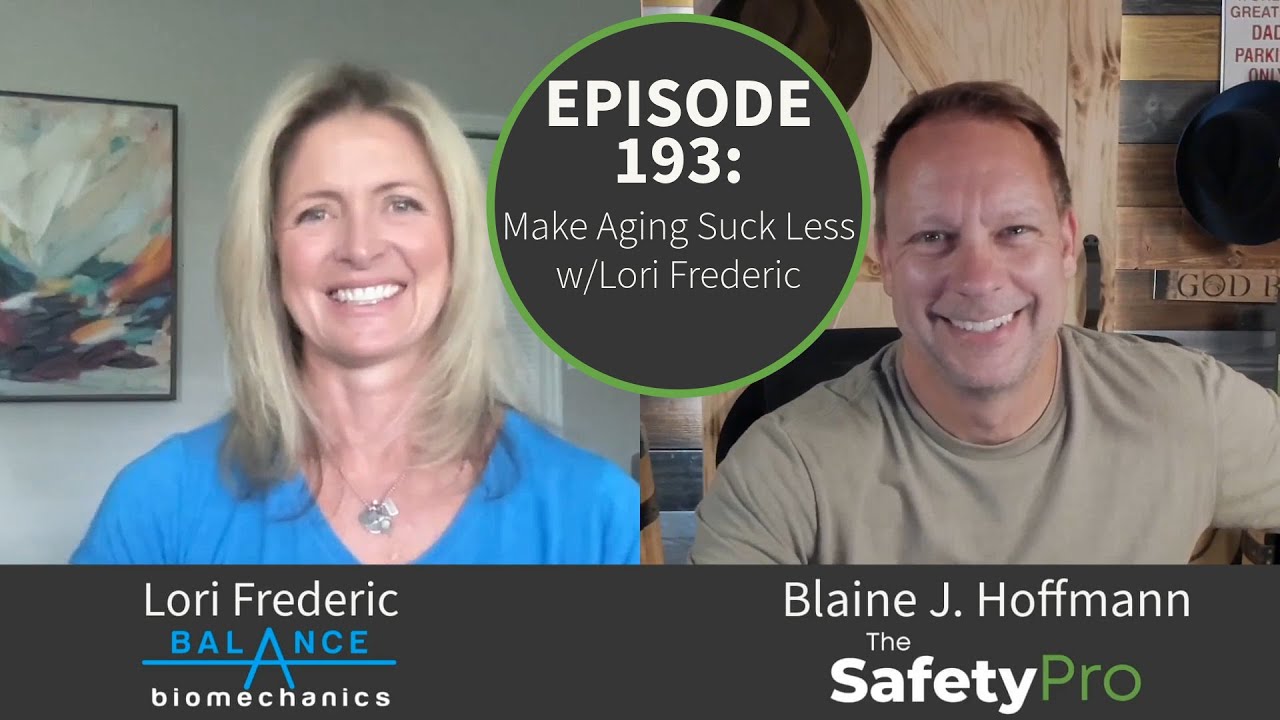
Blaine sent Lori Frederic a funny video of a man poking fun at the things you notice after 40, many of them at work. He jumps down out of a truck cab and goes through other everyday moves, and each one comes with the sound of crunching joints. Blaine laughed. Then, as Blaine put it, "oh wait, that's me."
That video became Episode 193 of The SafetyPro Podcast, which aired in October 2025, with Lori of Balance Biomechanics. Blaine, approaching 55, keeps a regular exercise routine now that wasn't there in Blaine's 30s, and is also feeling things that are new. Was it age, or not having done these things at a younger age? "Both," Lori said. As we age, Lori said, when things go a little sideways they seem to go way sideways, and it takes longer to get back to normal.
Just say it
Before they hit record, Blaine had confided not knowing how to approach this topic. Aging workforce? Seasoned? Older? It can feel like you can't say anything. Lori's answer was to just say it: "everyone's aging. We're all just at a different point on the timeline."
In the skilled crafts especially, Lori said, companies want to hold on to people with high skill levels whose bodies probably aren't holding up as well. And musculoskeletal and soft tissue injuries are still the biggest slice of everybody's injury pie chart, Lori said, with overexertion near the top.
From bendy to beef jerky
Lori explains stiffness with fascia, the clear stuff around the meat when you take apart a rotisserie chicken. It runs all over the body like a full-body suit. In Lori's view, fascia contributes to aches and soreness more than anything, because the places where it sticks change how we move.
Lori pictures two sheets of plastic wrap. Dry, they stick. Lubricate them and they slide. Movement and circulation are the lubrication. If a shoulder bugs you and you move it less, it gets less circulation and less glide, and the problem compounds.
A toddler's fascia, in Lori's picture, is bendy, stretchy and hydrated. As we age, ours gets "a little bit more like beef jerky." Some of that is natural, Lori said, and some of it is that we're just not active the way we were.
Lori later asked what makes stiff beef jerky move better. Blaine got there: hydrate it, tenderize it (to Lori, that means move it more) and warm it up. Warming, hydration and movement, Lori said, are why we do warm-ups.
As people age, Lori said, most will just need a little more time to warm up. When Lori works out, it's usually about 15 minutes in before things feel like they're moving better. For a joint with a past injury, Lori described adding a couple more minutes and a little more care.
Strength as a level of PPE
Lori was a gymnast and a diver growing up, a power athlete, and tells people a lot that building power helps keep muscle mass, which helps keep bone density. Power needs strength first. "You shouldn't sprint unless you are strong enough to do so," Lori said.
With muscle, if you don't use it, you lose it. People in the physical trades move all day, Lori said, but not necessarily in ways that build their muscles the way they should. Lori's way of putting it: "muscle mass and your strength and your resilience is a level of PPE." It's not magic, and you can still get hurt, but in Lori's words, "you'll come back better than if you weren't doing anything."
What Lori said about OSHA's first aid list
Blaine asked about kinesiology tape's history with OSHA, and whether newer options were stuck in the same limbo. This is Lori's account as of October 2025, when the episode aired; OSHA's position may have changed since.
Lori said kinesiology tape was considered medical treatment before 2015. After someone asked OSHA for a letter of interpretation, it became first aid, fitting the "non-rigid means of support" item on the first aid list in 1904.7.
Lori also described an OSHA memo clarifying first aid points such as massage, exercise and stretching. Lori recalled a May release but wasn't sure of the year. Blaine believed it was 2024. As Lori described it, telling someone to do a particular shoulder stretch three times a day for 20 seconds counts as medical treatment. The difference, Lori said, is being very specific versus very general.
Then there's red light therapy. Lori's team uses it with clients for regular aches and soreness, and Lori uses it nightly for everyday aches. Lori asked OSHA for clarification the year before, and about a week or two before the recording, the answer came back: medical treatment. As Lori described OSHA's reasoning, the light penetrates the skin and works at the cellular level, so it isn't like heat. Lori's frustration is that the first aid list dates to 2001, and "if it doesn't fit in the bucket, that means it's medical treatment."
Lori's approach is to keep tools like these in preventive use, the same way as wellness exercises. Blaine summed it up: using one after a suspected injury is where the gray area starts, compared with using it regularly to prevent aches. Lori agreed, and said "we play in the gray" because there's so much benefit.
What to take back to your site
- Talk about aging plainly. Lori's framing: everyone is aging, just at different points on the timeline.
- Give the warm-up a few more minutes. Lori said most people need a little more time as they age.
- When you talk about preventing strains, include strength. Lori calls it a level of PPE.
- Before deciding how tape, stretching or red light gets recorded, have whoever keeps your OSHA records read 1904.7 and the current letters of interpretation.
The full conversation with Lori covers more on nutrition, including Blaine's own diet changes.